







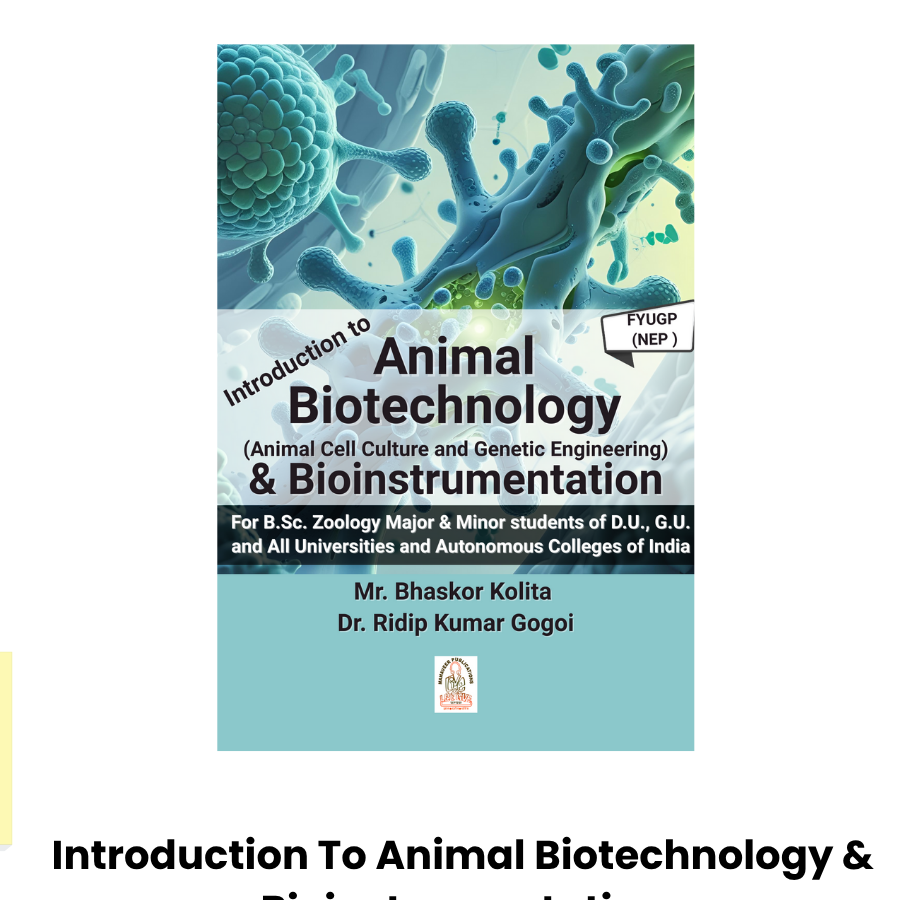
Introduction To Animal Biotechnology & Bioinstrumentation
Inhouse product
-
 Rs212.50
Rs250.00 -
Rs290.00
Rs310.00 -
Rs430.00
Rs450.00 -
Rs288.00
Rs300.00 -
Rs235.00
Rs250.00 -
Rs300.00
Rs320.00


Reviews & Ratings
Introduction to Animal Biotechnology & Bioinstrumentation : Animal Cell Culture and Genetic Engineering is a well-structured and comprehensive textbook designed in accordance with the FYUGP–NEP syllabus for B.Sc. Zoology Major and Minor students under Dibrugarh University, Gauhati University, and other Indian universities and autonomous colleges.
The book provides a lucid introduction to the principles and applications of animal biotechnology, covering topics such as cell culture techniques, genetic engineering, cloning, transgenic technology, and biomedical applications. It also introduces students to the fundamentals of bioinstrumentation, explaining the working principles, uses, and maintenance of laboratory instruments essential for modern biological research.
Each chapter combines theoretical clarity with practical insights, helping students understand the interconnection between biotechnology innovations and animal sciences. The inclusion of illustrations, flowcharts, and review questions makes the content engaging, self-explanatory, and examination-oriented.
Written by experienced educators, Mr. Bhaskor Kolita and Dr. Ridip Kumar Gogoi, this book serves as an ideal guide for undergraduate zoology students pursuing both theoretical and applied life sciences.
Key Features:
-
Follows FYUGP–NEP guidelines and CBCS curriculum.
-
Covers both Animal Biotechnology and Bioinstrumentation in an integrated manner.
-
Simple and student-friendly language with diagrams and examples.
-
Suitable for Zoology Major and Minor courses across Indian universities.
-
Authored by eminent academicians and published by Mahaveer Publications.
SECTION – A: THEORY
Chapter 1: Recombinant DNA Technology
1.1 Introduction to Biotechnology
1.2 Scope of Biotechnology
1.3 Restriction Enzyme
1.4 History of Restriction Enzyme
1.5 Types of Restriction Endonuclease Enzyme
1.6 Biological Role and Applications of Restriction Endonucleases
1.7 Restriction Mapping
1.8 Cloning Vector
1.9 Categories of Cloning Vectors (Prokaryotic and Eukaryotic)
1.10 Shuttle Vector
1.11 Phagemid and M13
1.12 Expression Vectors (Constructs)
Chapter 2: Gene Cloning
2.1 Genetic Engineering or Recombinant DNA Technology
2.2 Process of Genetic Engineering
2.3 Bacterial Transformation
2.4 Selection of Recombinant Clones
2.5 PCR-Mediated Gene Cloning
2.6 Gene Libraries
2.7 Screening DNA Libraries to Obtain Gene of Interest
2.8 Somatic Cell Nuclear Transfer
2.9 Cell Transformation Techniques
• Agrobacterium Mediated Transformation
• Calcium Chloride Method
• Electroporation
• Biolistics (Microprojectile/Particle Bombardment)
• Retroviral Method
Chapter 3: Animal Cell Culture
3.1 Brief History of Animal Cell Culture
3.2 Basic Concept of Animal Cell Culture
3.3 Basic Requirements of Animal Cell Culture
3.4 Tools and Equipment of Cell Culture
3.5 Cell Culture Media
3.6 Basic Techniques in Animal Cell Culture
3.7 Methods and Types of Cell Cultures
3.8 Cell Lines
3.9 Stem Cells
3.10 Development of Primary Cell Culture
3.11 Cell Viability
3.12 Cell Separation
3.13 Subculture and Passaging
3.14 Maintenance of Cell Lines
3.15 Transformation and Differentiation of Cell Cultures
3.16 Characterization of Cell Lines
3.17 Cell Culture Bioassays
3.18 Expressing Cloned Genes in Mammalian Cells
3.19 Advantages and Disadvantages of Animal Cell Culture
3.20 Ethical Issues of Animal Cell Culture
3.21 Applications of Animal Cell Culture
Chapter 4: Techniques in Biology
4.1 Microscopy
• Optical (Light) Microscopy
• Brightfield, Phase Contrast & Fluorescence Microscopy
4.2 Dark-Field & Confocal Microscopy
4.3 Electron Microscopy
4.4 Spectrophotometry (UV–VIS)
4.5 Blotting Techniques (Southern, Northern, Western)
4.6 DNA Sequencing
4.7 DNA Fingerprinting
4.8 DNA Microarray
4.9 Autoradiography
4.10 Radioimmunoassay
Chapter 5: Applications of Biotechnology
5.1 Application of Biotechnology
5.2 Genetically Modified Organisms (GMOs)
5.3 Nuclear Transplantation
5.4 Transgenic Animals
5.5 Transgenic Plants
• Pest Resistant BT-Cotton
• Herbicide Resistant Plants (Roundup Ready Soybean)
• Transgenic Crops with Improved Traits
5.6 Role of Transgenics in Bioremediation
5.7 Edible Vaccines
5.8 Industrial Enzymes and Genetically Engineered Products
5.9 Recombinant Insulin and Gene Therapy
5.10 Biosafety Concerns
5.11 Molecular Diagnosis of Genetic Diseases
Chapter 6: Molecular Separation and Immunological Techniques
6.1 Chromatography and Its Types
• Ion-Exchange, Adsorption, Partition, and Gel Filtration
6.2 Affinity Chromatography
6.3 High-Performance Liquid Chromatography (HPLC)
6.4 Immunological Techniques
• Immunodiffusion
• Immunoelectrophoresis
• Enzyme-Linked Immunosorbent Assay (ELISA)
SECTION – B: PRACTICALS
-
Demonstration of Spectrophotometer, Microscopes, Autoclave, Colorimeter, pH Meter, Electrophoresis, and Centrifuge
-
Study of Genetic Engineering Steps for BT Cotton and Golden Rice (through photographs)
-
Restriction Digestion and Gel Electrophoresis of Plasmid DNA
-
Separation of Amino Acids by Paper Chromatography
-
Demonstration of Animal Cell Culture Techniques (Photographs/Animation)
-
Genomic DNA Isolation from E. coli
-
Plasmid DNA Isolation (PUC 18/19) from E. coli
-
Demonstration of Restriction Digestion of Plasmid/Lambda DNA
-
Construction of Circular and Linear Restriction Map
-
Polymerase Chain Reaction (PCR)
-
Estimation of DNA by Colorimetric Method
-
Calculation of Transformation Efficiency
-
Separation of Biomolecules by Centrifugation
-
Demonstration of Molecular Techniques (Any One):
• Southern/Northern/Western Blotting
• DNA Fingerprinting
• DNA Sequencing (Sanger’s Method)
-
Frequently Bought Products
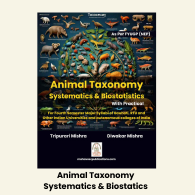
Animal Taxonomy Systematics and Biostatics with Practical for FYUGP NEP
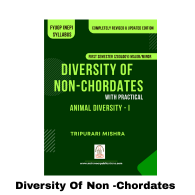
DIVERSITY OF NON CHORDATES
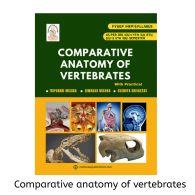
Comparative Anatomy of Vertebrates with practical
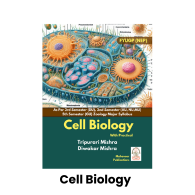
Cell Biology with Practical
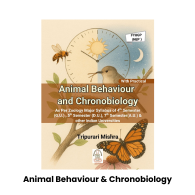
Animal Behaviour and Chronobiology With Practical
Product Queries (0)
Login Or Registerto submit your questions to seller
Other Questions
No none asked to seller yet
-
Rs212.50
Rs250.00 -
Rs290.00
Rs310.00 -
Rs430.00
Rs450.00 -
Rs288.00
Rs300.00 -
Rs235.00
Rs250.00 -
Rs300.00
Rs320.00
Mahaveer Publications